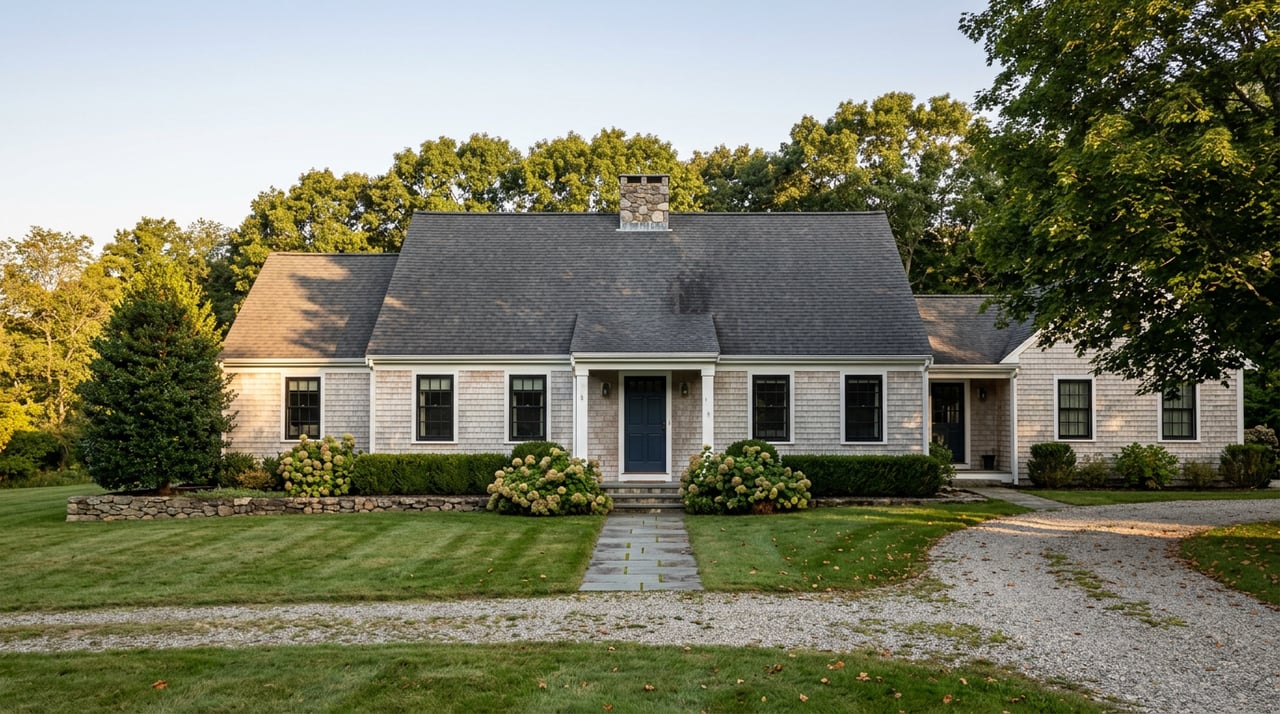
Why a Passing Title 5 Inspection Isn't the Last Septic Conversation in Bristol County
September 3, 2026
September 3, 2026
A seller in Dighton pumps the tank, hires a licensed inspector, and gets the report every closing needs: a passing Title 5. In most of Massachusetts, that piece of paper ends the septic conversation. In parts of Bristol County, it's often where a second, more expensive conversation begins.
That's the part sellers in Berkley, Dartmouth, Rehoboth, Westport, and similar towns tend to miss. A passing Title 5 tells a buyer the system works today. It says nothing about whether the town, or the state, is planning to ask that system to do more than the 1995 rules require.
Title 5 is the Massachusetts environmental code governing septic systems, in force since 1995. A licensed inspector checks the tank, the distribution box, and the leach field, and confirms none of it sits too close to a well or wetland. The inspection has to happen within two years before a sale closes, or within six months after if weather blocks access at the time of transfer. A pass is valid for two years, three if the owner can document annual pumping.
That's a snapshot of function, not a guarantee of compliance with whatever comes next. And in a handful of Bristol County towns, something is coming next.
Bristol County has more than half a million residents, and a majority of its housing stock is old or historic. Much of it still runs on the original septic system that was installed decades before the town ever discussed sewer expansion. Rehoboth is a clear example: the town's own reporting describes it as running without municipal water or sewer service, with homes on private wells and on-site septic systems regulated by the local Board of Health under Title 5's minimum standards.
The state has been pushing to change that math. Massachusetts regulators started a nitrogen-reduction initiative on Cape Cod aimed at replacing private septic systems that don't remove nitrogen effectively, since nitrogen from failing systems is a documented contributor to coastal water pollution. As of a local news report on the initiative, that conversation had moved north into three Bristol County communities: Dartmouth, New Bedford, and Westport. Whether each town has since adopted a formal plan is a question worth confirming with the local Board of Health rather than assuming either way.
At the time, Dartmouth's director of public health, Christopher Michaud, summed up why towns were cautious about signing on: state financing options exist, but "financing is debt, and many of our residents can't afford additional debt." That's a town official saying the quiet part out loud. Nitrogen-reduction upgrades aren't optional add-ons homeowners can decline indefinitely once a town adopts a plan. They're capital costs that get passed down to whoever owns the property when the requirement lands.
For a buyer or seller in Dartmouth or Westport specifically, that means the Title 5 pass in hand today doesn't answer the question that actually matters over a five or ten year hold: is this system on a path to needing an upgrade the current owner won't be around to pay for?
Bristol County sellers and buyers are usually working from a wide cost range, and the width of that range is itself useful information. Here's how the pieces typically break down for a home on a private septic system in this part of the state.
| Step | Typical cost | When it applies |
|---|---|---|
| Standard Title 5 inspection | $300 to $900 | Required within 2 years of every sale |
| Minor repair (baffle, distribution box) | roughly $3,000 to $10,000 | System functions but fails a specific component |
| Full system replacement | $15,000 to $40,000 or more | Failed inspection, no workable local upgrade option |
| Advanced (I/A) treatment system, annual service contract | $1,200 to $3,000 per year | Nitrogen-sensitive zones requiring enhanced treatment |
The replacement figure sits at the higher end specifically for Plymouth County, Bristol County, and Cape Cod, where soil conditions, water proximity, and stricter local requirements push costs above what a national average would suggest. A seller quoting a buyer the national median replacement figure is quoting the wrong number for this market.
The line that catches people off guard is the last one. An advanced I/A system isn't a one-time expense. It comes with an ongoing service contract, often quarterly monitoring, because the state requires performance sampling and reporting on these systems long after installation. That's a carrying cost that doesn't show up on a Title 5 report and rarely comes up until a buyer's attorney or lender asks about it directly.
Every Massachusetts county has septic systems. What makes Bristol County distinct is the overlap of three things at once: an old housing stock built before modern wastewater rules existed, a cluster of towns with limited or no municipal sewer, and now a live regulatory conversation in three of its own communities about whether private systems need to do more.
Towns across the county, including Attleboro, Berkley, Dartmouth, Dighton, Freetown, Lakeville, Rehoboth, Rochester, and Westport, share overlapping groundwater conditions that are already on local health boards' radar. That's the backdrop against which nitrogen-reduction rules are being discussed. A buyer looking at a well-and-septic property in one of these towns isn't just buying today's system. They're buying into whatever conversation the local Board of Health is having with the state.
Dighton is a useful example of the pattern. It's a small town with no significant industry left, a mostly residential character, and a housing stock that leans colonial and mid-century. Homes there run on the same private well and septic setup that's standard across the county's less-sewered towns. Nothing about that is unusual for Bristol County. It just means the septic conversation matters more there than it would in a fully sewered suburb closer to Boston.
A conditional pass lets a sale close while giving the seller up to two years to complete repairs, and it's often the practical choice for everyone involved, including the lender. The alternative, an escrow holdback where funds are set aside to cover the repair after closing, sounds cleaner on paper, but not every lender allows it. That's worth confirming with a buyer's loan officer before either side assumes it's an option.
If your property sits in Dartmouth, New Bedford, or Westport specifically, it's worth asking your local Board of Health directly whether a nitrogen-reduction plan has been adopted or is under active discussion for your street. That single phone call tells a seller more about future exposure than the Title 5 report itself, since the report only certifies the system as it functions right now.
A passing Title 5 report is the legal minimum to close, not evidence that a system is future-proof. Before waiving a septic contingency in one of Bristol County's non-sewered towns, it's worth asking two questions the report won't answer: how old is the current system, and has the town discussed nitrogen-reduction requirements at any recent Board of Health meeting. Those answers, not the inspection date, tell you what you're actually inheriting.
Does a passing Title 5 protect a buyer from future septic costs? It confirms the system works as of the inspection date and is valid for two to three years. It doesn't protect against a future town or state requirement to upgrade to a nitrogen-reducing system, which is a separate cost outside Title 5's scope.
Who pays for septic repairs when a home fails inspection? Massachusetts law doesn't assign that cost to the seller automatically. It becomes part of negotiation, whether that's a price adjustment, a pre-closing repair, or the buyer assuming the work after closing.
Are all Bristol County towns affected by the nitrogen-reduction initiative? Not based on available reporting. The discussion has specifically involved Dartmouth, New Bedford, and Westport. Other towns in the county still operate under standard Title 5 rules, though it's worth confirming current status with your local Board of Health since town plans can change.
Septic questions are rarely simple, and in Bristol County they're tied to conversations happening at the town level, not just the state level. If you're weighing a purchase or a sale on a property with a private system, Ricardo Real Estate Solutions can help you figure out what questions to ask your local Board of Health before you're staring down a deadline. Get a Free Home Valuation and let's talk through what your specific property is actually working with.



We go beyond traditional real estate by offering hands-on knowledge, strong negotiation, and a results-driven approach that ensures every decision is backed by expertise.